


How to Write a Poem for a UK Open Mic Night: A Beginner's Checklist
There is a particular hush in a pub back room when a poem starts to work. Twenty or thirty people, a microphone on a stand, someone's pint paused halfway to their mouth — and then a line lands, and nobody moves. That hush is not a mystery. It comes from a poem written with a room in mind, and from a reader who has done the boring bits beforehand. If you have never read at an open mic, the boring bits are the whole job.
Write the poem for ears, not for a page
A poem read silently can afford to be dense. A poem read aloud cannot. Listeners get one pass, at your pace, with no chance to glance back at the previous line. That changes what belongs on the page.
Read every draft out loud. Not under your breath in the kitchen — actually out loud, standing up, at the volume you would use in a room. The lines that trip you are the lines that need work. If you run out of breath halfway through a line, it is too long or trying to do too much. If you find yourself hurrying to reach the end of a phrase, cut a word or two.
Prefer concrete nouns and active verbs. A listener can hold a bus ticket, a burnt saucepan, a hospital corridor. Words like "grief" and "closure" slide straight off the ear. Keep most sentences short, too. Long, clause-heavy sentences can be lovely on paper; in a noisy room they turn into fog.
Know your slot before you write a word
Open mics differ wildly. Some give you three minutes, some five, some a single poem and no clock at all. Check the night's listing or message the host before you decide what to bring. This matters more than beginners expect — running over your time is the quickest way to lose a room, and hosts remember.
As a rough guide, a poem read at a comfortable pace takes about 120 to 150 words a minute. So a three-minute slot is roughly 360 to 450 words: one medium poem, or two short ones, with room to breathe and say the title. Time yourself properly, out loud, with a clock, and do it twice. Nerves slow you down. If you are at two minutes fifty in your living room, cut a stanza.
Shape it so a first-time listener can follow
No one in the audience can reread your poem. Build in handholds:
- A repeated line or phrase that returns — it gives the ear something to grip.
- A clear turn. Words like but, then and later that year tell a room the poem has moved.
- Names, places and numbers. "The number 42 bus" beats "public transport".
- A strong opening line and a strong closing line. Those are the two the room will remember.
The friend-on-the-phone test
Read the poem to someone who has never seen it — over the phone, or across a kitchen table. If they ask a question about something you assumed was obvious, that is the bit to fix. If they go quiet at the right moment, or laugh where you hoped they would, you have found the shape of the piece. Explanations you need to give beforehand are usually explanations the poem should be doing itself.
Rehearse standing up, out loud
Reading well is a physical skill, and it improves the way any physical skill does: by repetition in conditions close to the real thing. Stand up. Speak at full volume. Hold the page where you would actually hold it, not flat on a desk.
Learn your first and last lines by heart, so you can lift your eyes at the moments that matter most. Print one poem per sheet in large type — bigger than you think you need, because the lighting at open mics is often dreadful. Mark the page lightly: a slash where you want to pause, an underline under a word that needs weight. Then put the "poetry voice" away. A slow, deliberate, sing-song delivery distances an audience faster than almost anything else. Talk to them.
A practical checklist for the week before
- Confirm the slot length and how sign-up works — in advance, or on the door.
- Time the poem aloud twice and cut at least a tenth of it.
- Print a clean copy in large type, and keep a spare in your bag.
- Learn the first and last lines by heart.
- Prepare one sentence of introduction: the title, and nothing apologetic.
- Decide what you will do if you lose your place — pause, find the line, carry on.
- Check your travel and the start time, and plan to arrive early.
Take water with you. Skip a second coffee if it makes your hands shake, and eat something beforehand.
On the night
Arrive early and watch the first few readers. The room will tell you what it wants: some nights are raucous, some are still, and you can adjust your delivery accordingly. Sit near the front if you can. Walking up to the mic is easier from the second row than the back of a crowded bar.
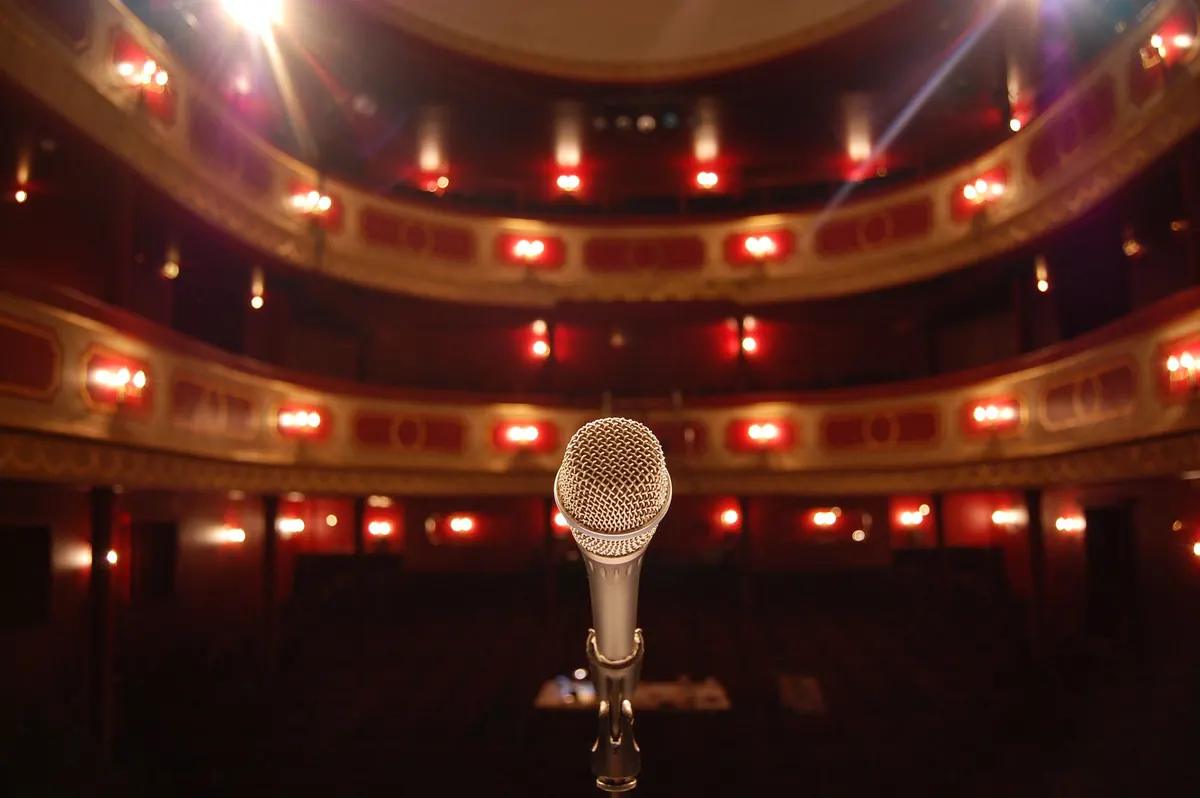
On the mic itself: stand close enough that you could almost touch it with an outstretched hand, and speak across it rather than down into it. Never tap it. Hold your paper off to one side so it does not block your voice. A stool is fine if you want to be still; standing usually gives you more air.
When your name is called, plant your feet, let one breath out slowly, and look at three friendly faces — left, centre, right. Say your first line a little more slowly than feels natural. If you forget where you are, do not apologise; the audience has not noticed yet, and an apology only draws attention to it. Pause, find the line, continue. Most people in that room are simply glad it is not them up there.
Afterwards: keep the best bits
Straight after, while it is fresh, jot down what worked and which lines got a reaction. Then edit the poem using what you heard — the room is a very good editor, and it will tell you where the poem sagged if you are honest about listening. Thank the host, put your name down for the mailing list, and book yourself into another night within the month, before the nerves have time to harden into a story about how it went. If a poem draws on something difficult and reading it leaves you unsettled, that is worth mentioning to someone you trust.
Photo: A. S. / Pexels